





TRUSTED WORLDWIDE










What is the Build-Operate-Transfer model?
If you have a stack of clearly defined roles and job descriptions to fill offshore within the next year, this is the model for you. With our Build-Operate-Transfer (BOT) model, you give us the brief, sit back, and we’ll do all the hard work of setting up a dedicated offshore development centre, handling the operations, and instilling an engaging culture. Once the foundation is stable, we’ll help you be fully prepared to take full ownership of your offshore centre without minimal disruptions.


Mitigate risks
Lower initial costs
Full ownership
How does the
build-operate-transfer
engagement model work?
The BOT model for scaling engineering teams works by an offshore partner establishing an offshore development centre using their established processes. With the team established as a foundation, the hiring company can spin up its own legal entity and on-the-ground support structures to facilitate operations. Below is an indicative timeline of what this process looks like, depending on the size of the team.
Build
(6–12 months)
-
Set up office and workspaces
-
Creation of localised employer branding and recruitment assets and hiring roadmap
-
Our Recruitment team help relocate candidates from outside of Bangalore
-
The Scalers vets candidates for hard and soft skills as well as cultural fit; you get the final say
-
We onboard into your existing systems and culture

Operate
(18–60 months)
-
You leverage The Scalers’ shared resources (Ops, finance, HR, recruitment)
-
Your offshore team operates the same way as your local team
-
Your dedicated Partner Success Manager is your single point of contact on the ground, while your Chief Happiness Officer ensure your employees are engaged.
-
The Scalers continue building the team, expanding vertically and horizontally
Transfer
(6–12 months)
-
Final recruitment for any required shared services members (i.e. payroll, HR)
-
Transfer of all assets to your legal entity (we can assist in establishing one)
-
Migration of support systems to your own tools (ERP, HRMS, ATS)
Examples of BOT projects
BANKING | FINANCE
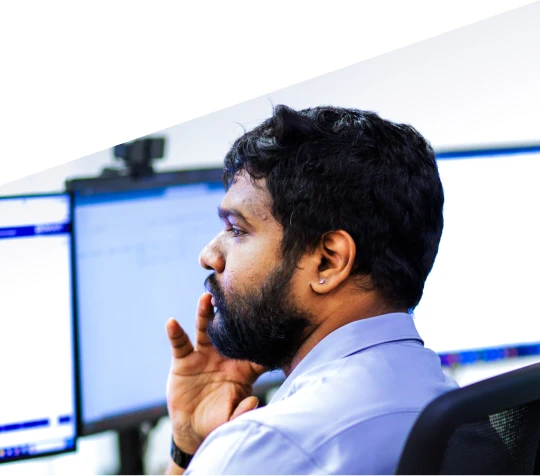
How Preqin scaled to a 450+ person R&D Centre
Discover how a UK FinTech scaled from 4 to 450+ employees, launched an innovative new product and established its own entity in India.
GOVERNMENT
Ras Al Khaimah delivers digital initiatives with a custom-built ODC
Find out how we built an elite engineering centre for the Ras Al-Khaimah government to digitise processes and deliver digital initiatives at scale.
Building the best tech and data teams since 2014
Since day one of The Scalers, we’ve been committed to quality and putting people first. The results are shown in our long-term partnerships, low attrition rates, and third-party certification and awards.
-
<11%
attrition
rate -
37%
average
savings -
4.9/5
rated on
Clutch
ACCREDITED AND CERTIFIED


Build Operate Transfer vs other engagement models
Depending on your exact needs and requirements, the Build-Operate-Transfer model may not be the best solution to leveraging global talent. The following table shows how it compares to a managed team with The Scalers and traditional outsourcing
Build-Operate-Transfer
Multiple teams
The BOT model is most cost-effective at scale. For a single team, a managed team would be more cost-effective, but is possible when required.
Managed Teams with The Scalers
Single or multiple teams
With The Scalers, you can have anywhere from 3 developers upwards, working exclusively for you.
Traditional Outsourcing
Single team
This model consists of a single team that works exclusively for you.
Build-Operate-Transfer
Long-term strategic asset
The BOT model helps establish a strategic hub to leverage global talent, extend operating hours, and reach new markets.
Managed Teams with The Scalers
Long-term development
Managed teams with The Scalers enable you to build offshore teams with the right profiles who stick around for the long run.
Traditional Outsourcing
Short-term fix
Outsourcing provides rapid access to talent to implement limited scope improvements.
Build-Operate-Transfer
Complete
Your offshore centre becomes an additional office within your organisation with complete integration between all teams.
Managed Teams with The Scalers
Deep
The Scalers ensures every employee is a first-class citizen, fully integrated into your company processes and tools, but are legally separate.
Traditional Outsourcing
Limited
Work is conducted externally with contact through project managers.
Build-Operate-Transfer
Full legal ownership
Every employee is hired for you and works exclusive to you. Once transferred, you have complete legal ownership of the entity and employees.
Managed Teams with The Scalers
Mixed
You work with your team the same as an in-house team, but they are registered under our entity. Every employee is hired just for you and works exclusively for you.
Traditional Outsourcing
Limited
Control is mediated through an external Project Manager and a defined scope of work. You have less influence on internal execution.
Build-Operate-Transfer
Complete
Full control over all team processes, benefits, and workflows once transferred, offering the uitlimate flexibility in your offshore hub.
Managed Teams with The Scalers
Flexible
Complete control over team processes and workflow, but The Scalers handle the on-the-ground operations.
Traditional Outsourcing
Zero
The outsourcing provider decides all internal team processes. Your only option is to change providers.
Build-Operate-Transfer
High
At every stage, you own all intellectual property (IP) and your team works exclusively for you, enabling long-term knowledge retention.
Managed Teams with The Scalers
High
All intellectual property (IP) reside 100% within your entity, and your team works exclusively for you, enabling knowledge retention.
Traditional Outsourcing
Low to moderate
Knowledge is often retained by the vendor’s team, while IP can be complex to manage.
Build-Operate-Transfer
Transparent fixed costs
No upfront costs; one single, transparent fee per employee, covering salary, infrastructure, and operations until transfer.
Managed Teams with The Scalers
All inclusive monthly fee
One single, all-inclusive monthly fee (salaries, equipment, admin, etc.) and no upfront costs.
Traditional Outsourcing
Varriable, project based
Often quoted per project or per hour. Suitable for short-term, defined tasks and projects.
Build-Operate-Transfer
Managed Teams with The Scalers
Traditional Outsourcing
Size
Multiple teams
The BOT model is most cost-effective at scale. For a single team, a managed team would be more cost-effective, but is possible when required.
Single or multiple teams
With The Scalers, you can have anywhere from 3 developers upwards, working exclusively for you.
Single team
This model consists of a single team that works exclusively for you.
Strategy
Long-term strategic asset
The BOT model helps establish a strategic hub to leverage global talent, extend operating hours, and reach new markets.
Long-term development
Managed teams with The Scalers enable you to build offshore teams with the right profiles who stick around for the long run.
Short-term fix
Outsourcing provides rapid access to talent to implement limited scope improvements.
Integration
Complete
Your offshore centre becomes an additional office within your organisation with complete integration between all teams.
Deep
The Scalers ensures every employee is a first-class citizen, fully integrated into your company processes and tools, but are legally separate.
Limited
Work is conducted externally with contact through project managers.
Ownership
Full legal ownership
Every employee is hired for you and works exclusive to you. Once transferred, you have complete legal ownership of the entity and employees.
Mixed
You work with your team the same as an in-house team, but they are registered under our entity. Every employee is hired just for you and works exclusively for you.
Limited
Control is mediated through an external Project Manager and a defined scope of work. You have less influence on internal execution.
Customisation
Complete
Full control over all team processes, benefits, and workflows once transferred, offering the uitlimate flexibility in your offshore hub.
Flexible
Complete control over team processes and workflow, but The Scalers handle the on-the-ground operations.
Zero
The outsourcing provider decides all internal team processes. Your only option is to change providers.
IP & knowledge retention
High
At every stage, you own all intellectual property (IP) and your team works exclusively for you, enabling long-term knowledge retention.
High
All intellectual property (IP) reside 100% within your entity, and your team works exclusively for you, enabling knowledge retention.
Low to moderate
Knowledge is often retained by the vendor’s team, while IP can be complex to manage.
Cost model
Transparent fixed costs
No upfront costs; one single, transparent fee per employee, covering salary, infrastructure, and operations until transfer.
All inclusive monthly fee
One single, all-inclusive monthly fee (salaries, equipment, admin, etc.) and no upfront costs.
Varriable, project based
Often quoted per project or per hour. Suitable for short-term, defined tasks and projects.

Talent pool
Quality
Ecosystem
Cost-efficiency
Hundreds of happy clients



Frequently asked questions
The main benefits of the BOT model over outsourcing are quality, control, ownership and long-term cost-effectiveness. Outsourcing is typically more cost-effective for short-term and project-based work, but the costs increase at scale and over time. In addition, outsourcing usually attracts worse quality employees who don’t have ownership of their work, leading to lower quality output. In contrast, BOT models give you full ownership over your employees who report directly to you from day one and eventually are employed in your own legal entity. Once fully transferred, there are no additional costs, so you gain the full benefit of the lower overhead costs offshore.
The idea is to educate on when it’s worth doing. It’s tricky because it depends on the exact nature of the team. For some technologies and industries, around 20 employees starts to be the point where it may be more financially advantageous to transfer ownership, but it’s typically closer to the 40 or even 60 employee mark. If you’d like a more accurate estimate, contact one of our advisory team members.
The BOT model works the same for large enterprise companies as it does for smaller organisations, but with a difference in scale. It requires more resources to help recruit and onboard your new team and the operate phase typically lasts longer to ensure every employee is properly onboarded and the long-term stability of the offshore centre. Due to the vast talent pool in Bangalore, scaling larger teams is still possible even for larger offshore teams. For example, Preqin managed to scale to over 450 employees before they transferred out.
Yes, BOT services are highly customisable. At The Scalers, we tailor the team structure, recruitment profiles, technology stack, and operational protocols to meet the specific demands and regulatory environment of your industry (e.g., FinTech, Healthcare, E-commerce). In addition, due to the massive talent pool in Bangalore and India, we can usually hire employees who have experience within your specific industry, and so are already familiar with the nuances of your business.
The BOT model helps scale engineering teams by providing rapid access to offshore talent pools with quality engineers at cost-effective rates. This enables companies to stretch their budgets further than they could in UK, US, and EU tech hubs to accelerate delivery. The BOT model enables you to start recruitment immediately, build a strong foundation, and scale smoothly without high up-front costs, making it the go-to choice for many organisations seeking to establish a long-term development hub.
The build phase consists of two parts: the first is establishing the foundations for the rest of the cooperation, and the second is the actual recruitment for the roles to be filled. The second of these two phases typically extends into the operational phase for larger offshore projects to ensure staff are onboarded correctly and to acquire more difficult-to-fill positions. The first phase involves consultations with the partner to obtain their specific job descriptions and protocols for onboarding staff remotely. In the meantime, the Scalers’ on-the-ground staff assign a dedicated office space in our office complex and procure the necessary equipment, including employee branding.
During the Operation phase of our BOT model, you have complete control over the workload and workflow of your offshore employees. They report to you and work on the tasks you assign. The difference is that The Scalers’ operations team handles all of the on-the-ground requirements like procurement, payroll, admin and HR. Once your core team is established, we can start building out those functions for you until everything is transferred under your control.
The transfer phrase works based on your specific requirements and needs. We can start discussions as soon as your core delivery team are in place, or we can continue with the operation phase for longer until you are ready to transfer ownership. Once initiated, we will start recruiting for the support functions you need on the ground and can help advise you as to the steps and processes required to establish your own legal entity. With everything in place, we finalise the transfer plan for documentation and assets and do so to minimise any operational disruptions for the company and employees.
The BOT (Build-Operate-Transfer) model for an ODC is an engagement where an offshore partner sets up, runs, and then transfers full ownership of your dedicated offshore development centre to you. It reduces risk and accelerates time-to-market, with the key difference being the predetermined final transfer of the entire entity to your full control.
Typically, companies only engage the BOT model if they have 40 employees or greater, as it is only at this point that the costs associated with supporting a team start to become more financially beneficial than delegating to a third party. There are, however, expectations as some roles make smaller teams financially worth transferring out, for situations where a company needs to legally own its offshore team even though it is smaller and less cost-effective.