




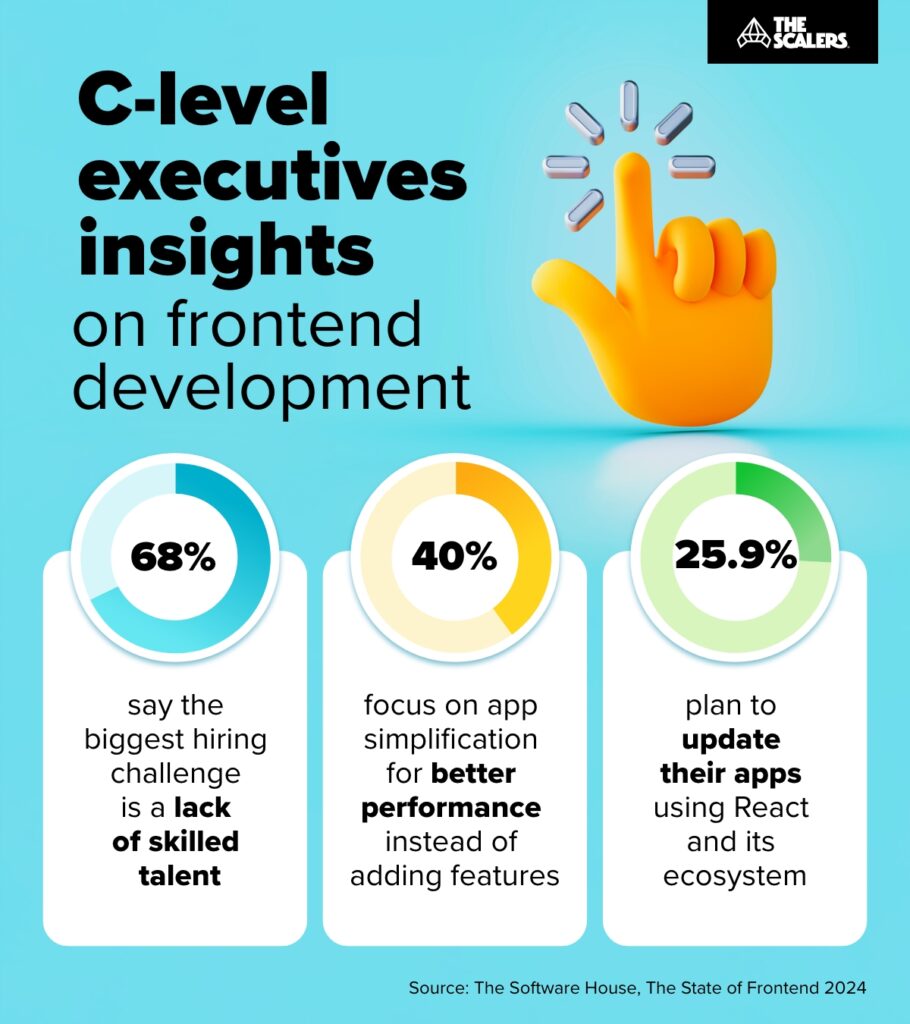
When you hire dedicated frontend developers, you risk hitting a wall, either by not finding the right talent or engagement model to scale your team.
At The Scalers, we’ve built over 100 dedicated teams in the past decade — many including top frontend developers — for tech leaders like yourself, struggling to get the specialists your business needs.
In this guide, we’re sharing everything we’ve learned to help you hire the best frontend talent available.
What is a dedicated frontend developer?
A dedicated frontend developer builds and designs the visual elements of a website that users interact with, but unlike freelance or outsourced frontend developers, they work exclusively for a single organisation.
These professionals are hired through a third party responsible for sourcing, hiring, onboarding, and engaging top engineers in talent-rich locations like Bangalore, India.
Dedicated frontend developers are known for possessing valuable technical skills and for adding long-term value to the business they work with, thanks to their approach to problem-solving and creative thinking.
Besides their proficiency in some of the most popular programming languages, dedicated developers specialise in domain-specific languages like Elm, Mint, and Riot.js.
Dedicated frontend developer levels: from mid-level to architect
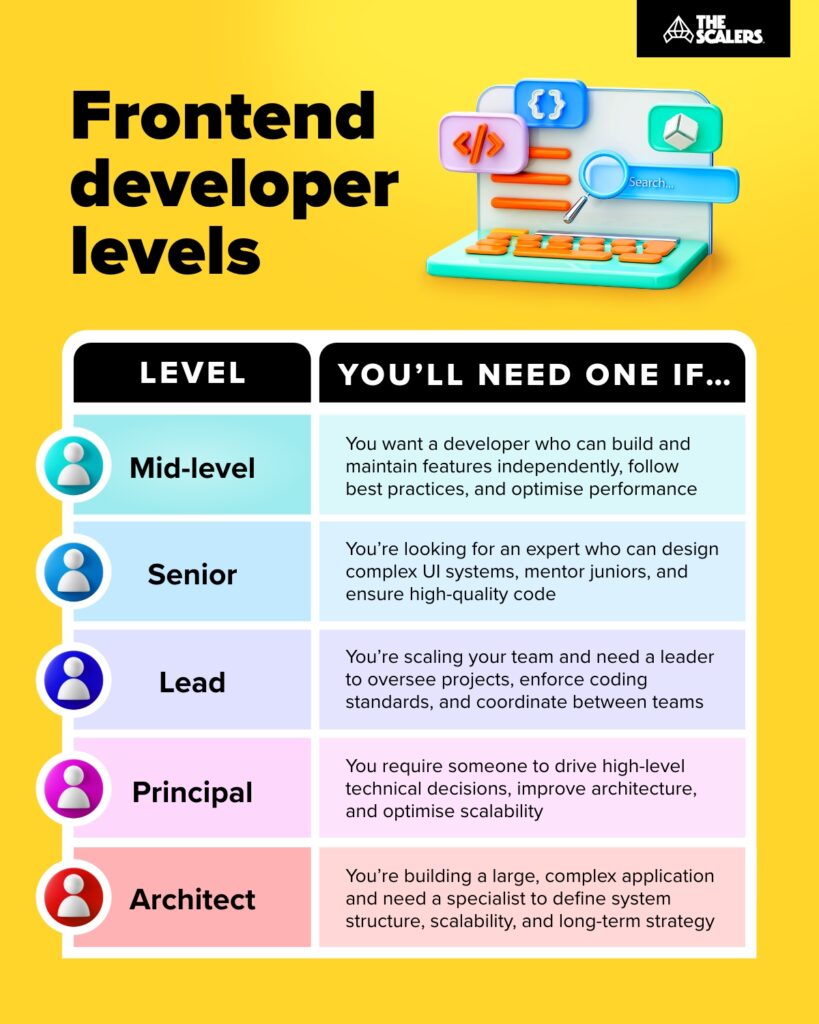
Before exploring the benefits, costs, and steps to hire dedicated specialists successfully, you must first know which seniority level you need.
From our experience hiring dedicated frontend developers, companies often look for senior professionals to extend their existing in-house teams. This is because senior engineers offer a combination of deep technical skills and strategic thinking.
Sometimes, businesses need a specific skill set that mid-level engineers can’t provide. Other times, they may already have higher leadership roles filled and just need seasoned experts to enhance their team’s capabilities.
In the infographic below, we describe each role by specifying the instances where you may want to hire a senior developer over a mid-level or an architect over a lead engineer.
Mid-level frontend developer (2-5 years of experience)
Technical skills:
- Strong proficiency in JavaScript and familiarity with TypeScript.
- Experience with modern frontend frameworks/libraries (e.g., React, Angular, Vue.js).
- Understanding of state management libraries (e.g., Redux, Vuex).
- Proficiency in CSS preprocessors like SASS or LESS.
- Experience with RESTful APIs and/or GraphQL.
- Familiarity with build tools and module bundlers (e.g., Webpack, Gulp).
- Knowledge of responsive and mobile-first design.
Soft skills:
- Problem-solving abilities.
- Ability to work independently.
- Effective time management.
- Strong communication skills.
- Collaboration with cross-functional teams.
Senior frontend developer (5-8 years of experience)
Technical skills:
- Advanced knowledge of JavaScript and TypeScript.
- Expertise in one or more frontend frameworks/libraries.
- Experience with server-side rendering (e.g., Next.js, Nuxt.js).
- Proficiency in performance optimisation techniques.
- Strong understanding of web accessibility standards.
- Experience with testing frameworks (e.g., Jest, Mocha, Cypress).
- Familiarity with CI/CD pipelines.
Soft skills:
- Leadership and mentorship capabilities.
- Strategic thinking.
- Excellent problem-solving skills.
- Ability to handle complex projects.
- Strong communication and interpersonal skills.
Lead frontend developer (8-10 years of experience)
Technical skills:
- In-depth understanding of frontend architecture.
- Experience with micro-frontend architectures.
- Proficiency in code review and setting coding standards.
- Knowledge of backend technologies to facilitate better integration.
- Advanced debugging and performance profiling.
Soft skills:
- Team leadership and project management.
- Ability to define and enforce best practices.
- Strong decision-making skills.
- Conflict resolution.
- Effective communication with stakeholders.
Principal frontend developer (10+ years of experience)
Technical skills:
- Expertise in designing scalable and maintainable systems.
- Proficiency in multiple frontend and backend technologies.
- Experience with cloud platforms and services.
- Advanced knowledge of security best practices.
- Ability to evaluate and integrate new technologies.
Soft skills:
- Strategic vision and execution.
- Mentorship of senior developers and leads.
- Influencing and guiding technical direction.
- Strong analytical and problem-solving skills.
- Excellent communication with technical and non-technical stakeholders.
Frontend architect (12+ years of experience)
Technical skills:
- Mastery in designing complex system architectures.
- Proficiency in multiple programming languages and frameworks.
- Experience with large-scale application development.
- In-depth knowledge of performance tuning and optimisation.
- Expertise in selecting and integrating appropriate technologies.
Soft skills:
- Visionary leadership.
- Ability to communicate complex technical concepts.
- Strong mentorship and team development skills.
- Strategic planning aligned with business objectives.
- Effective collaboration with diverse teams.
Benefits of hiring dedicated frontend developers
We’ve already covered what dedicated frontend developers can bring to your business, but what are the tangible long-term benefits of building a team with these professionals?
Well, the main benefit of hiring dedicated frontend developers is working with specialists who are fully committed to your organisation’s success. Through offshore software development — a proven strategy to hire top tech talent — you can set up a team that not only excels in programming skills but is also aligned with your culture and values.
Another advantage of hiring dedicated engineers is enjoying cost-effective operations. For instance, if you hire software developers in India, you can build a world-class tech team at a fraction of the cost you’d pay at home.
Beyond cost savings, there’s another key benefit that’s often overlooked: improved engineering productivity. As dedicated developers work just for your business and don’t juggle clients, they can focus their efforts on delivering high-quality code and refining your product.
This productivity boost is even greater when developers are supported and happy. However, that depends on having the right partner to foster a positive and inclusive environment.
How much does it cost to hire a dedicated frontend developer?
The final cost of hiring a dedicated frontend developer depends on the location, specialisation, seniority, and quality of the development partner you work with to build your team.
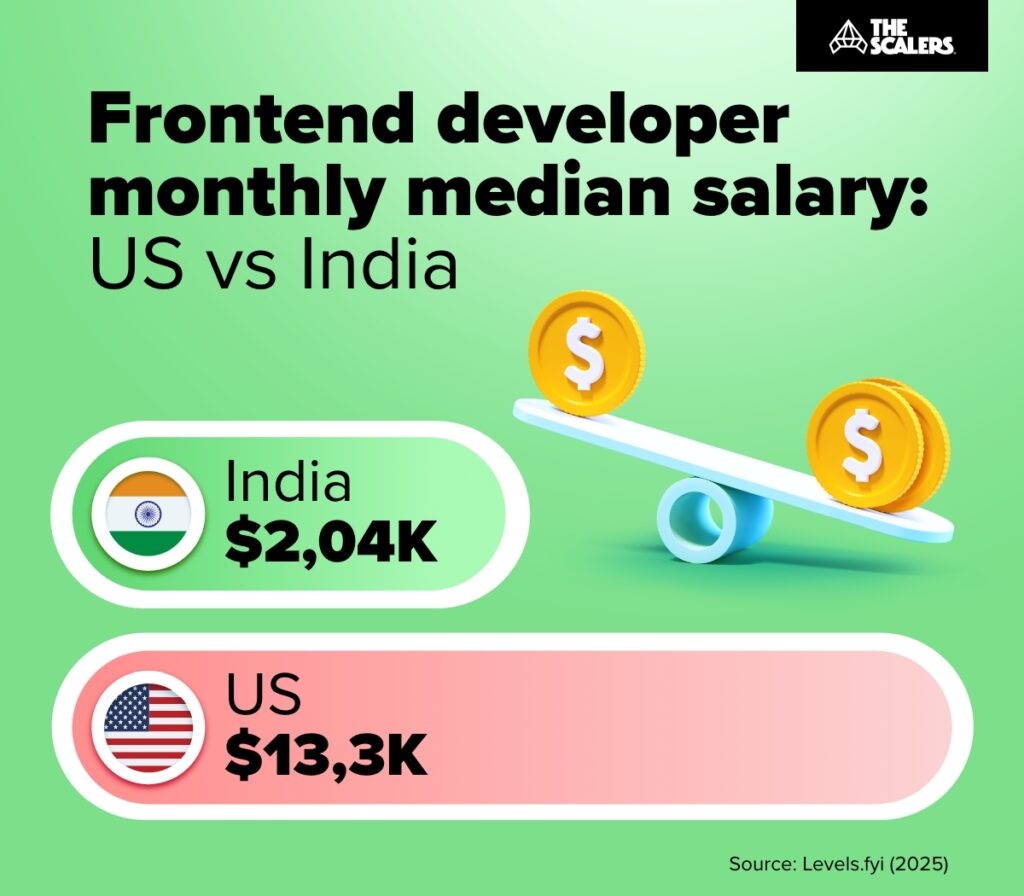
From these, the factor that affects costs the most is the location. According to specialised salary portal Levels.fyi, a dedicated frontend developer in the US commands a monthly median salary of $13,300, while an equivalent Indian dev earns $2,022.
Apart from India, there are other countries where tech leaders can find top frontend development talent, like Poland and Colombia. The table below shows the hourly rates dedicated engineers in these locations earn.
| Country | Hourly rate |
| India | $19-$30 |
| Poland | $24-$65 |
| Colombia | $27-$71 |
Source: PayScale, Upwork, and Indeed (2025)
Remember, these rates don’t reflect the final cost of hiring these professionals. They are estimates based on average national salaries, and the actual cost will depend on their skill set and the engagement model you establish with your development partner.
How to hire dedicated frontend developers: 3 proven steps
There’s not a single right way to hire dedicated frontend developers. However, there are proven systems that have helped industry leaders build high-performing tech teams with top dev talent.
The steps we’re outlining in this section are the ones our partners have followed to get the right specialists to join their organisations.
1. Decide the type of frontend developers you need
Before making your first hire, ask yourself the following questions:
- How many frontend developers do I want to start my team?
- What seniority should they have?
- What technologies, frameworks, and tools should they be proficient in?
- Will they focus on new development, maintenance, or both?
- How will they integrate with my existing team, workflows, and processes?
This information will be decisive in knowing the type of talent you need and will help your future software development partner source the best professionals available. Indeed, once you find a reliable vendor, they will recommend what’s best for your business per your unique requirements.
See Nextpoint’s case. This US-based SaaS company for the legal industry had tried to hire developers via offshoring in India but didn’t get the results they expected. They either couldn’t find the right skill set or faced cultural mismatches between their headquarters and the team in India.
That changed when they found an offshore software development partner who understood their needs, answered all their questions, and offered them a tailored solution. This way, they could finally build a dedicated team that included frontend specialists and was pivotal to deploying 10+ key releases and launching a groundbreaking serverless product.
There’s nothing quite like The Scalers where our employees are literally our employees, not coming through any third party company. They know our culture, and our clients so they can execute meaningful code and deliver meaningful features.
2. Explore and verify software development partners
As you may have already noticed, choosing the right offshore development partner is crucial to ensure you get the frontend specialists you’re looking for. Here are the key signs of a reliable partner and the warning signs to watch out for before making a decision:
Signs of a reliable partner
- Proven track record. They showcase successful offshore teams with detailed case studies.
- Transparent pricing. They provide clear cost breakdowns without hidden fees.
- Elite talent recruitment. They source engineers from top software development hubs.
- Strong communication. They respond promptly, professionally, and with technical expertise.
- Cultural bridge. They acknowledge cultural differences and actively help bridge the gap.
- Robust security measures. They hold certifications like ISO 27001 for data protection.
Warning signs to watch out for
- Vague case studies. They lack specifics on projects, outcomes, and partnerships.
- Hidden costs. They avoid discussing pricing details upfront.
- Subpar recruitment process. They don’t assess technical skills or cultural fit thoroughly.
- Poor communication. Slow responses, unclear explanations, or lack of confidence.
- Dismissal of cultural differences. They ignore potential challenges in cross-cultural collaboration.
A proof of how important it is to verify and assess the reliability of your partner is My Muscle Chef’s story. This renowned food and beverage services company did what most Australian companies do when looking for tech talent abroad: they relied on outsourcing providers in countries like The Philippines.
Their experience was far from ideal, as they suffered from poor code quality, miscommunication, and a lack of integration into their own team and processes.
When they conducted a more detailed search with a new set of criteria, they found a partner and an offshoring model that (finally) worked for them. Since then, they’ve been able to extend their team with developers skilled in frontend technologies like JavaScript, TypeScript, HTML, ReactJS, and CSS — pivotal to achieving a 50% boost in development and a 70% reduction in tech debt.
To me, typical offshoring or outsourcing is usually about cost saving and not scaling. I wanted a properly distributed model where we have a true team where I have control over all my engineers and can scale when needed. We now have this in place and it is working very well.
3. Sign a partnership agreement and start building your team
After doing a background check and having conversations with development partners, you’d likely have a couple of offers to choose from. Now, it’s up to you to decide which proposal will benefit your organisation the most in the long term.
For many companies, the decisive factors in choosing between one partner or another are unique advantages, like having a dedicated Chief Happiness Officer (CHO) to keep developers motivated or offering training sessions to cultivate soft skills within their offshore team.
For Colmore, it was having a partner that did all the heavy lifting for them, from HR and legal to infrastructure management. With the right offshore model and setting, the organisation built an 85-person R&D hub that helped them double their data processing capacity.
The Scalers has given us a sense of belonging, moving from their IT hub to our own building. They help us with each and everything we do; HR, technology, admin, everywhere. I’ve never seen anyone else provide this in the industry.
Why hire dedicated frontend developers with The Scalers
Hiring dedicated frontend developers and setting up a high-performing team with The Scalers is an excellent solution for your business if:
- You’ve already tried outsourcing or offshoring with no success.
- You can’t find the right people and skills locally.
- You need a long-term team that fully integrates with your in-house engineers.
Over the past decade, we’ve helped tech and business leaders like yourself build tech teams with the top 1% of Indian frontend development talent in Bangalore, ‘The Silicon Valley of Asia.’
What sets us apart from other offshore development companies is how we instil our partners’ DNA into their offshore teams and our approach to building a people-centric culture where engineers can really shine and thrive. We’re proud to maintain a less than 15% developer attrition rate, compared to 34% in other Indian offshore companies.
If you’re interested in learning more about how we can help you hire Indian programmers in Bangalore, contact our team by filling out this form and telling us your unique needs. One of our senior executives will answer you promptly!
Perhaps you’re also thinking about building a team with .NET talent? If that’s the case, we recommend you read our guide on hiring offshore .NET developers.
In summary
To hire dedicated frontend developers successfully, you need a clear strategy. Without the right approach and relying on outdated systems, you’ll struggle to attract the talent needed to support your business goals and growth.
Make sure to collaborate with a reliable development company that not only sources top talent with a proven hiring and engagement model but also acts as your trusted partner on the ground.
Key takeaways:
-
1
Hiring dedicated frontend developers ensures long-term commitment and alignment with your organisation’s goals.
-
2
Seniority level matters. Mid-level, senior, lead, principal, and architect roles offer different expertise and strategic value.
-
3
Offshore software development, especially in India, provides access to top frontend talent at a significantly lower cost than in Western countries.
-
4
The three steps to hiring dedicated developers are deciding on the type of specialists you need, verifying development partners, and signing the offer that best adjusts to your requirements.
-
5
The Scalers builds tech teams with elite, dedicated frontend developers that align with partners’ culture and values.
Thank you for reading this far, and good luck with building your frontend development team!
FAQs
Hiring costs vary depending on seniority, skills, and other factors. On average, Indian frontend developers earn between $19 and $30 per hour, which is significantly lower than rates in the US or Europe.
Look for strong technical skills in JavaScript, TypeScript, HTML, CSS, and modern frameworks like React, Angular, or Vue. Seniority matters too — mid-level engineers are great for standard builds, while senior and lead developers bring the strategic thinking needed for complex systems.
At The Scalers, we can help you hire dedicated frontend developers that work exclusively for your organisation, integrated with your culture, processes, and long-term goals. The result: faster releases, higher productivity, and a committed team that grows with your business.
You can build a team from scratch, starting with just a few frontend developers, extend your existing in-house capacity, or set up an offshore development centre. In every case, your developers work full-time for you, fully aligned with your business goals.
Most businesses can hire and onboard their dedicated frontend developers within 4 to 6 weeks. The exact timeline depends on the size of your team, the tech stack, and the level of expertise required, but our proven model ensures a fast, smooth hiring process without sacrificing quality.
Build Your Team,
Not Just a Contract
With The Scalers’ offshore dedicated development team, you get engineers who join your workflow for the long run. Grow steadily, stay flexible, and work with people who care about the product as much as you do.