






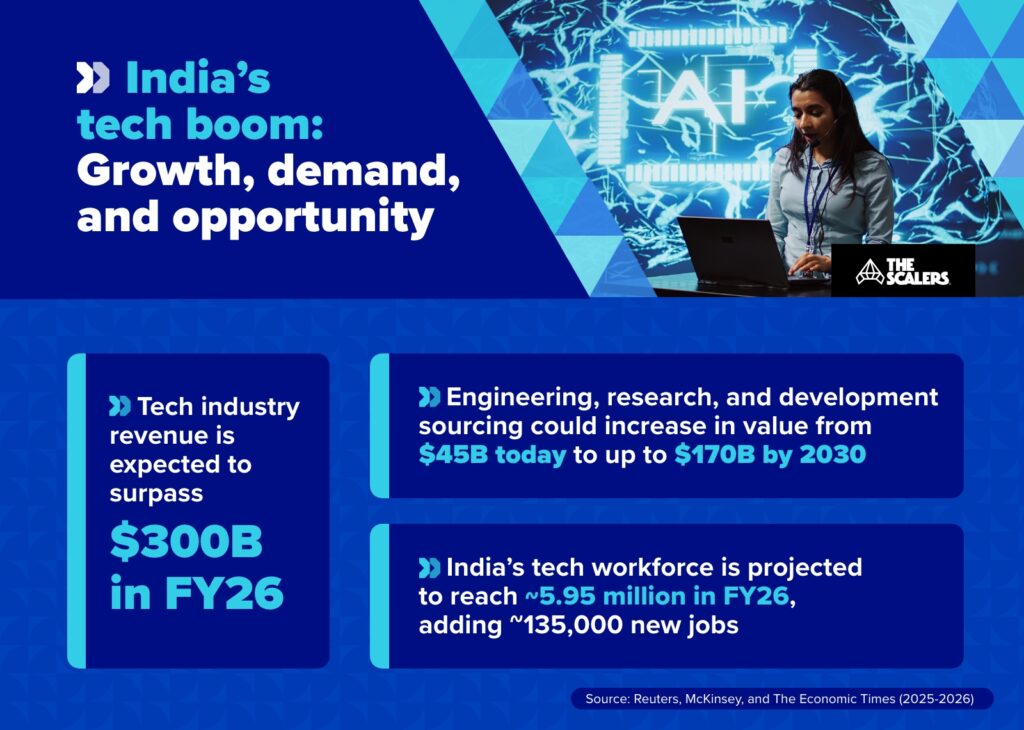
- The best countries to hire offshore developers are India, Poland, Romania, the Philippines, and Colombia, each strong for different reasons. India offers the deepest talent pool of senior, AI-capable engineers.
- You can hire offshore developers via marketplaces/platforms or by collaborating with an offshore development partner. The right decision depends on whether you need a quick contractor or a dedicated, long-term team.
- Hiring offshore typically saves 25–40% per engineer versus hiring locally, but the bigger win is access to talent you simply can’t find at home.
- For long-term product work, a dedicated team (engineers who work only for you and integrate into your workflow) beats freelancers and traditional outsourcing on quality, retention, and ownership.
If you’re reading this article, you’re ready to hire offshore developers. You just need some help on how and where to find the right talent.
In this guide, we’ll walk you through the best countries for hiring offshore developers. Then, we’ll analyse the top companies and platforms that can help you source specialists from these locations, and show you how to hire dedicated developers who work exclusively for you and integrate like an in-house team.
We’ve drawn on 10+ years of building 130+ tech and data teams to make this as practical as possible. We hope you find it helpful!
What does it mean to hire offshore developers?
Before we go further, let’s clear up what “hiring offshore developers” means, because it gets muddled with a few other terms.
Offshore developers are engineers based outside your country, usually in a talent-rich hub like Bangalore. You can hire developers overseas through three main routes, and each suits a different need:
- Freelance marketplaces like Upwork are best for quick, one-off tasks.
- Vetted talent platforms like Toptal or Arc are best for fast sourcing of individual specialists.
- Working with an offshore development company is best for building a long-term team. Your partner can help you hire dedicated developers who work exclusively for you, as an extension of your in-house team.
When you hire developers through an offshore partner, your engineers report straight to you, not to a vendor sitting in the middle. As Adith Khan, Director of Partner Success at The Scalers, explains: “When engineers report directly to the organisation rather than through a third-party vendor, collaboration becomes far more natural. This direct reporting structure eliminates the friction you get with traditional outsourcing models.”
One thing people mix up: offshoring isn’t outsourcing. With outsourcing, you hand a whole project to a third-party vendor whose team juggles multiple clients. With offshoring (depending on the partner and its engagement model), the engineers work exclusively for you, inside your processes, as part of your team.
How much does it cost to hire offshore developers?
Cost is usually one of the first questions tech leaders ask, so let’s be concrete. Hiring offshore developers in a hub like India typically saves 25–40% per engineer on total cost versus hiring locally, and that’s before you factor in the overheads (payroll taxes, pension, office space, recruitment, HR) bundled into a single monthly fee with the right partner.
The savings compound when you account for lower attrition, better knowledge retention, and the ability to scale without renegotiating contracts every quarter.
A real example of a company saving with offshoring is Nextpoint, a US legal software company. They came to us for senior talent they couldn’t find in Chicago (cost wasn’t even their main driver). The Bangalore team we built for them saves around $1 million a year!
There’s nothing quite like The Scalers, where our employees are literally our employees, not coming through any third-party company. They know our culture and our clients, so they can execute meaningful code and deliver meaningful features.
Offshore development rates by country in 2026
| Country | Junior ($/hr) | Mid-level ($/hr) | Senior ($/hr) | Best value for |
| India | $15-25 | $25-40 | $45-50 | Scale + depth of talent |
| Vietnam | $18-28 | $25-40 | $35-50 | Mobile and web development |
| The Philippines | $12-20 | $20-30 | $35-40 | IT-BPO services |
| Poland | $25-40 | $35-55 | $50-80 | Nearshore solutions |
| Romania | $20-35 | $30-45 | $40-65 | Multilingual EU teams |
| Colombia | $20-35 | $30-45 | $40-55 | US time zone alignment |
Sources: Upwork, Arc.dev, PayScale, Clutch (2026)
A note on pricing: These hourly rates are useful for comparing markets, but they represent mainly short-term or outsourcing work. That said, hourly billing isn’t exclusively a short-term arrangement. As Ryan Chana, Head of Global Advisory at The Scalers, points out: “It also depends on the business model. Consulting agencies, for example, place their engineers with clients and bill them on an hourly basis, even for long-term engagements.”
If you want to build a dedicated offshore development team through a partner like The Scalers, the pricing model may differ. For instance, we offer a monthly all-inclusive fee covering salary, benefits, infrastructure, recruitment, HR, and admin. This model simplifies accounting and eliminates the hidden costs that often plague hourly arrangements.
For a deeper dive on offshore rates, read our guide to offshore software development rates by country.
Other factors affecting the cost of hiring offshore developers
Besides location, these are the factors that affect the final price you’ll pay for hiring offshore developers:
- Expertise and technology stack. If you want to hire data engineers (one of the most in-demand role types in offshore teams) or a developer with a very specific skill set, you may need to pay more than if you just need a generalist.
- Seniority. This may sound obvious, but a professional with 10 years of experience will command a higher salary than one with 3-5 years.
- Industry-specific experience. Developers who have worked with companies similar to yours, especially in niche industries like legal or EdTech, will likely be more expensive.
- The overheads/operating model. Some providers advertise low rates but pile on recruitment fees, office costs, and admin charges later.
- The quality and track record of your offshore partner. A partner with top talent and a strong track record will charge more, but you get better productivity, output, and lower turnover, which saves you money long-term.
Best countries to hire offshore developers
Here’s a quick rundown of the five most popular locations to hire offshore developers. For a deeper comparison, read our guide to the top countries for building offshore teams.
- India. Best for large, scalable teams of senior, AI-capable engineers with strong experience working with Western companies. The top Indian developers are concentrated in hubs like Bangalore, the Silicon Valley of Asia.
- Poland. Best for EU-based projects that require strong technical skills, though rising costs have eroded its price advantage.
- Romania. Best for EU projects needing secure, multilingual teams; strong in cybersecurity.
- The Philippines. Best for cost-effective support and IT-BPO functions, with a smaller engineering pool than India. (See our Philippines vs India comparison).
- Colombia. Best for time-zone overlap with the US.
Best platforms and companies to hire offshore developers
Once you know where you want to hire, you need to decide who to hire through. Offshore talent is typically sourced via three routes: freelance marketplaces, vetted talent platforms, or offshore development partners.
Here are five of the most popular options and what each is best for:
| Provider | Type | Best for |
| The Scalers | Offshore development partner | Long-term, dedicated teams of senior AI-capable engineers |
| Toptal | Freelance platform | Elite freelancers for critical, well-defined projects |
| Upwork | Freelance marketplace | Quick, short-term freelance hiring |
| BairesDev | Nearshore & staff augmentation company | US time-zone-aligned teams in Latin America |
| Arc | Vetted remote talent platform | Fast freelance or full-time remote hires |
The Scalers
The Scalers builds dedicated offshore software development teams in India. Since 2014, they’ve set up over 130 offshore tech and data teams in Bangalore for organisations based in the US, Europe, and Australia.
Their approach to offshore software development differs from that of freelance platforms and outsourcing firms. They build tech teams with offshore software developers and data engineers who work exclusively for their partners and who are fully aligned with their goals, mission, and vision.
Companies looking to hire dedicated offshore developers for long-term product development will find The Scalers a strong fit.
Toptal
Toptal is a freelancing platform that connects companies with the top 3% of global tech talent across various fields. Since 2010, they’ve served over 25,000 clients, including major brands and startups like Zendesk, Shopify, and Motorola.
They are known for using a rigorous vetting process that sources premium talent at premium rates. Organisations use Toptal when they need the best freelancers for critical projects and prioritise quality over cost.
Upwork
Upwork is the world’s largest freelance marketplace with over 5 million clients and 12 million registered freelancers. The platform covers virtually every skill level and budget range, so it is accessible for projects of all sizes and complexity levels.
Unlike specialised platforms, Upwork offers a self-managed hiring process where companies can browse profiles, post jobs, and handle negotiations directly. It’s an excellent option for organisations looking for quick access to a vast freelance talent pool.
BairesDev
BairesDev operates from San Francisco and helps companies hire top LATAM tech talent. They work across more than a hundred sectors and tackle complex projects in real estate data management software, educational technology platforms, among others.
Their services cover the entire software development lifecycle, from initial conceptualisation to final implementation. Given that Baires Dev hires just specialists located in LATAM, their offering attracts US companies that need remote nearshore developers in their time zone.
Arc
With Arc, companies can hire offshore remote developers and other technical professionals working from anywhere in the world. The platform offers both freelance and full-time remote hiring options with built-in vetting processes.
Beyond recruiting, they handle secure payments and compliant global hiring through trusted EOR partners. Companies that need vetted developers quickly for either contract work or full-time positions often find Arc a good fit.
How to hire offshore developers (step by step)
To hire the right talent, you need a plan. Here’s a breakdown of what you should do to start building your new offshore team:
Step 1: Define what you need
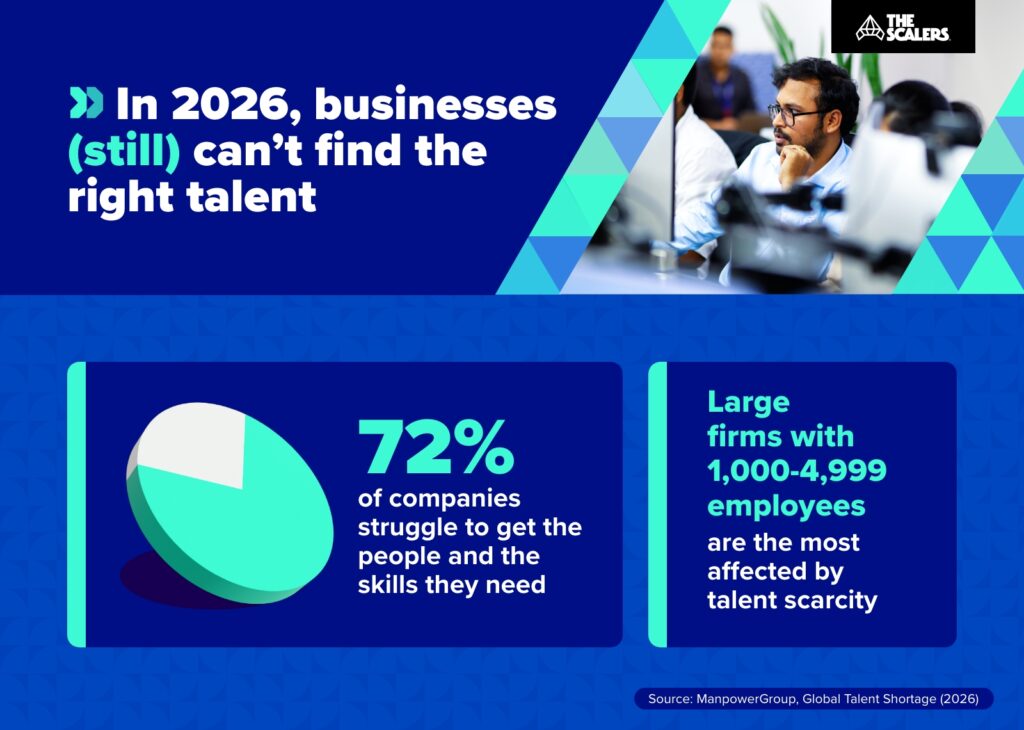
What roles are you filling? What tech stack and seniority level? Think about the kind of team you’ll need over the next 12 to 18 months, and whether your product requires specific domain expertise. Write it all down: role descriptions, must-have skills, compliance needs, and your timeline.
Step 2: Choose your location
Not every offshore market will suit your needs. Match the country to your priorities: time zones, talent pool, cost, and anything else that matters to you. If you’re based in the US and want to run live standups with your offshore team, Colombia is a good choice. If you run async workflows and want extended development coverage, India is an ideal offshore destination. The country profiles earlier in this article will help you decide.
Step 3: Select your hiring and engagement model
Building a dedicated offshore development team works best for ongoing product development and companies scaling engineering capacity. Hiring freelancers (or outsourcing) is a better fit for temporary, one-off tasks.
If you decide to work with an offshore development partner, they will help you choose the setup that best fits your needs:
- Development team extension: add a few engineers to your existing team.
- Dedicated development team: set up a dedicated team that works only for you.
- Offshore Development Centre or GCC: a larger operation or legal entity for scaling into the hundreds.
- Build-Operate-Transfer (BOT): the partner builds and runs the team, then transfers it to your own entity.
The model you pick also narrows down who you should partner with.
Step 4: Find the right offshore partner
A trusted offshore development partner handles everything on the ground: recruitment, onboarding, HR, legal compliance, office space, equipment, and ongoing team engagement. To check whether they’re the right fit, look at their track record (ask for case studies and read their Clutch reviews).
A few red flags worth watching for:
- Contract lock-in clauses that keep you paying even if you scale down.
- Unclear pricing, where surprise recruitment, project-management, or admin fees get bolted on later.
- Rock-bottom rates, which usually signal cut corners on talent or facilities.
- High attrition, a sign engineers are treated as anonymous resources rather than your team.
- Culture and process misalignment around feedback, documentation, and ways of working.
Step 5: Pick the best talent and start working
Your partner will screen candidates and bring you in at the final stage. They’ll send you profiles, CVs, technical assessments, and interview notes, but you have the final say. Once you’ve picked your engineers, manage them the same way you do your in-house team: set priorities, review code, ship features. The key is treating your offshore developers as full members of your product team, not remote contractors in a silo.
Why a dedicated team works best for long-term product work
Freelancers and developers hired through outsourcing work for short bursts, but they leak knowledge, because when the contract ends, the context walks out the door. A dedicated team is the opposite: engineers stick around long enough to deeply understand your product and retain institutional knowledge.
What makes dedicated developers different isn’t just their technical expertise. Sure, they bring niche programming skills, but they’re also problem-solvers who contribute ideas, suggest improvements, and push back when something doesn’t make sense. They have the soft skills CTOs value the most.
These developers are so invested in your mission, vision, and goals that, over time, they stop being “the offshore team” and just become… your team.
Preqin, a UK FinTech, is a clear example. They transitioned from traditional outsourcing to a dedicated development team that eventually scaled to a 450+ person R&D Centre in Bangalore. The engineers they hired were 100% aligned with the company’s goals and pivotal in launching Preqin Pro, the flagship product that cemented the organisation’s status as a global leader in alternative asset insights.
Hire offshore developers with The Scalers
If you’re considering building an offshore team from the ground up or adding developers to your existing team, we can help.
In the last 10+ years, we’ve developed an offshore model that has helped companies in multiple industries hire the right people.
Working with us means:
- You get a fully dedicated development team sourced from the best Indian tech talent in Bangalore, ‘The Silicon Valley of Asia.’ Our rigorous 7-step recruitment process ensures you get senior, AI-fluent developers who match your exact requirements.
- You enjoy a dedicated office where your developers can work in a modern space and have access to the best equipment and tech appliances.
- You have the ongoing support of a CHO, a professional responsible for your team’s daily well-being and for planning events, celebrations, and workations where you can meet your team in person.
If you want to know more about how we can help you hire dedicated developers, fill out this form. One of our senior executives will contact you shortly to talk about your new tech team.
FAQs
Working with an offshore partner provides fully dedicated teams, cultural alignment, ongoing support, and modern infrastructure, while platforms are better for short-term or freelance projects.
You retain full control over your dedicated development team. Engineers follow your processes, report to your managers, and work as an extension of your organisation. We handle operations and admin so your leaders can focus entirely on delivery, quality, and alignment.
You can start with as few as two or three engineers and scale your team to 20, 50, or even 100+ skilled professionals.
Yes. In tech hubs like Bangalore, you can hire senior developers in any in-demand or niche technology, including AI/ML, data engineering, cloud-native, DevOps, and platform engineering. The depth of the talent pool ensures access to highly skilled developers with exactly the capabilities you need.
The Scalers ensures new hires are fully set up and ready to contribute from day one. Employee attrition is under 15%, compared to the market average of 34%, keeping offshore teams happy and motivated.
If an engineer underperforms, our People & Culture team initiates a structured Performance Improvement Plan with clear goals over 30 days. If improvements aren’t met, we proceed with termination and already have replacement recruitment underway to avoid disruption. In severe cases, we can bypass the PIP and terminate immediately.
We hire top dedicated developers who not only meet your technical needs but also fit your culture, communication style, and ways of working. Our People & Culture team reinforces this through ongoing engagement. Over time, your offshore engineers adopt the same mindset and values as your local team (you get a real “in-house team” feeling!).
Your offshore team integrates into your existing tools, ceremonies, and workflows, standups, sprint planning, retros, code reviews… everything. Communication occurs through your preferred channels, and project management and communication tools (Slack, Teams, Jira, etc.), and engineers collaborate directly with your product and engineering leaders.
Your offshore team works in their local time zone, but we ensure a comfortable 3-4 hour overlap for real-time collaboration with Europe and the UK. This gives you both synchronous work time and extended development coverage. When your local team ends its day, progress continues (one of the most underrated advantages of offshoring), so time zone differences work in your favour.
Absolutely. One of the major benefits of offshoring is the ability to scale your team as your business grows. The flexibility you get when hiring a dedicated development team via offshoring is unmatched.
You can absolutely do that. At The Scalers, we offer two flexible options for transferring employees to your payroll: Dry Transfer (which involves paying the transfer fee specified in the Master Service Agreement) and Scale & Own (a 3-year program to facilitate a smooth, cost-effective, and successful shift).
Extend Your Team With Dedicated Developers
Looking to augment your engineering capacity with AI-capable developers? With our development team extension solution, you can hire data and software engineers who operate inside your workflows since day one